 Pin It
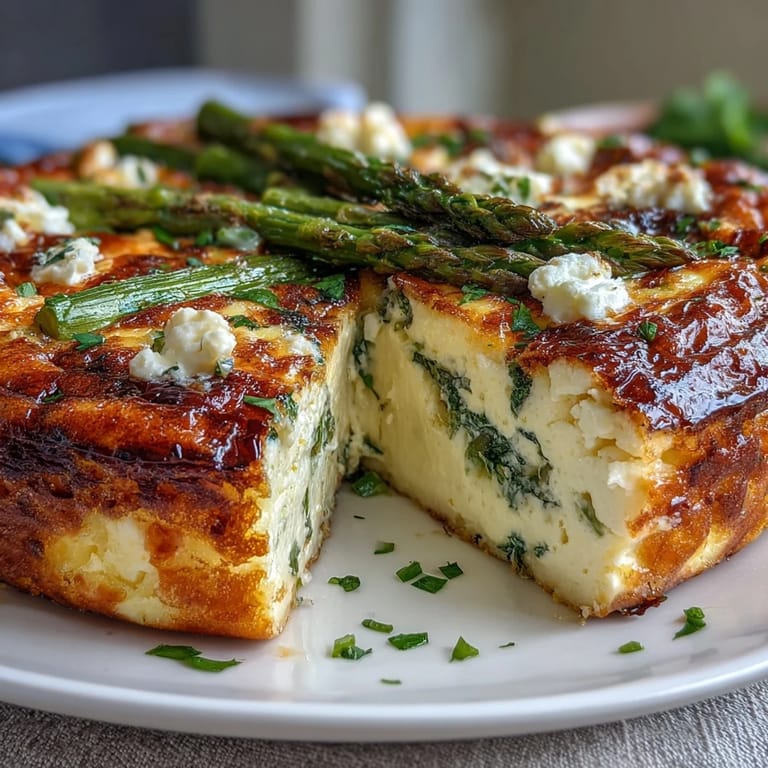
 There's something about spring that makes me want to cook eggs in a cast iron skillet on a Sunday morning—maybe it's the way the kitchen fills with steam, or how the first farmers market asparagus looks so impossibly green. I discovered this frittata almost by accident, really, when I had a handful of tender asparagus, some creamy goat cheese that needed using, and the sudden realization that I could make something far better than scrambled eggs. The technique is forgiving enough that I've taught it to friends who claim they can't cook, and somehow it always turns out golden and light.
I remember making this for friends during that weird spring when everyone was finally ready to gather indoors again—someone brought a bottle of cold rosé, and suddenly our Tuesday morning felt like the kind of brunch that justifies lingering at the table. The frittata came out of the oven perfectly set with those little pockets of melted goat cheese, and watching people's faces light up when they realized I'd made it that same morning never got old.
Ingredients
- Asparagus (about 200 g): This is the star—trim those tough woody ends by holding a spear and bending gently until it snaps naturally, then cut into 2 cm pieces so they cook through in the time it takes the eggs to set.
- Red onion (1 small): The finely chopped pieces soften into sweet jammy bits that give the frittata depth without overpowering the delicate eggs.
- Baby spinach (1 cup): Add it last so it stays vibrant and doesn't turn dark or bitter—roughly chopped means it wilts faster and distributes evenly.
- Eggs (6 large): Room temperature eggs whisk smoother and incorporate more air, which makes the frittata lighter and fluffier than cold ones straight from the fridge.
- Whole milk (1/4 cup): A splash of milk keeps the texture creamy rather than dense—think of it as a gentle binding agent that lets the eggs stay tender.
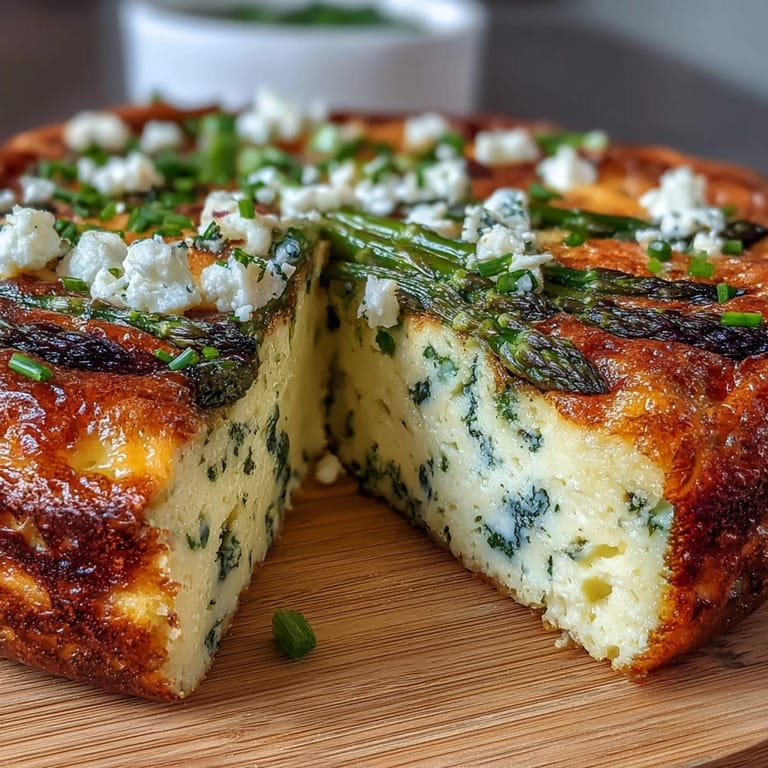
- Goat cheese (100 g): Crumbled, never stirred into the egg mixture, so you get those pockets of tangy creaminess in every bite rather than a uniform taste.
- Parmesan (2 tbsp grated): Adds a salty umami note and helps the top turn golden in the oven without you having to fuss with the broiler.
- Fresh chives and dill: Chives go in the egg mixture and as garnish for brightness; dill is optional but it's worth the handful for that herbaceous spring feeling.
- Olive oil and butter (2 tbsp and 1 tbsp): The oil sautés the vegetables, and the butter gets whisked in just before the eggs go into the pan for a richness you'll taste in the finished frittata.
Tired of Takeout? 🥡
Get 10 meals you can make faster than delivery arrives. Seriously.
One email. No spam. Unsubscribe anytime.
Instructions
- Heat your oven and skillet:
- Set the oven to 180°C and let it warm while you prep—this 10 minutes matters because a fully preheated oven means the top of the frittata will cook through evenly without the edges drying out.
- Sauté the onions and asparagus:
- Heat olive oil in a 25–28 cm ovenproof skillet over medium heat, then add the chopped red onion and let it soften for a couple of minutes until it's translucent and starting to turn sweet. Add the asparagus pieces and cook for 4–5 minutes, stirring so they don't stick, until they're just tender but still have a slight snap when you bite one—you want them cooked through but not mushy.
- Wilt in the spinach:
- Toss in the baby spinach and stir for about a minute until it collapses into the pan and loses its raw green look. The vegetables should be loosely scattered across the pan, not piled on top of each other.
- Whisk and season the eggs:
- In a separate bowl, crack the eggs and whisk them with the milk, salt, pepper, half of the chives, and the dill if you're using it—you want everything combined but not overworked, just enough so the whites and yolks are unified. Taste a tiny bit of the mixture to check the seasoning; remember that cheese goes in next, so don't oversalt.
- Pour and top:
- Lower the heat under the skillet to low, pour the egg mixture evenly over the vegetables, then dollop the crumbled goat cheese across the surface in scattered clusters. Sprinkle the grated Parmesan over everything, then let it cook untouched for 4–5 minutes until the edges start to look set but the very center still jiggles slightly when you gently shake the pan.
- Finish in the oven:
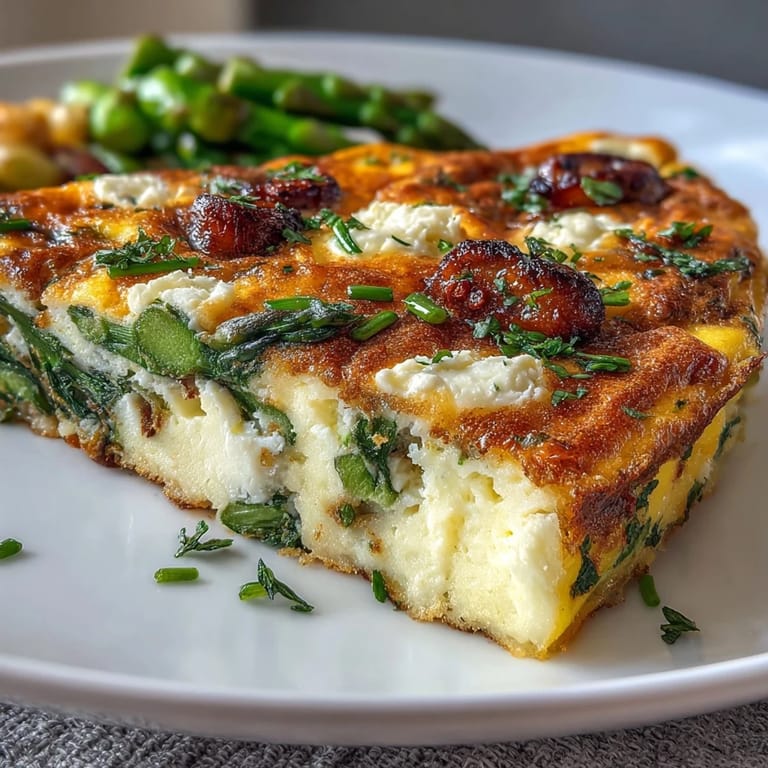
- Transfer the whole skillet to the preheated oven and let it bake for 10–12 minutes—the frittata is done when the center is just set and the top has taken on a light golden hue. If you're unsure, give the pan a tiny shake; the center should barely wobble, not slosh around.
- Rest and serve:
- Pull the skillet out and let the frittata rest for 5 minutes—this cooling period lets everything firm up just enough to slice cleanly into wedges. Scatter the remaining fresh chives and a pinch of red pepper flakes over the top if you like, then cut and serve warm or even at room temperature.
 Pin It
 There's a particular kind of quiet that settles around a table when everyone's eating a frittata that's turned out right—no one rushing to the next thing, just lingering over forks and maybe sneaking a second slice when they think no one's looking. That's when I know this recipe has done its job.
Why Spring Vegetables Matter Here
Spring asparagus has a tender texture that would get lost in a heavy cream sauce but shines in something as gentle as a frittata—the eggs cradle it without drowning it out. The combination of fresh dill and chives isn't just flavor; it's a signal that winter's ended and the kitchen can feel lighter again. I've tried making this with frozen asparagus in January, and while it still tastes fine, it doesn't have that delicate snap that makes you remember why you were excited about spring in the first place.
The Secret of Tender Eggs
The milk matters more than you'd think—it's tempting to skip it and use more eggs for a denser, richer frittata, but the milk creates tiny pockets of steam that keep everything light and fluffy even after the eggs have fully set. I've also learned that cooking low on the stovetop first, then finishing in the oven, gives you control; the oven's gentler heat cooks the center evenly without racing the edges, which means no rubbery edges and creamy centers. Watch through the oven window if you can—the moment the top looks barely set and still has a tiny bit of shine to it, that's when it's perfect.
Make It Your Own
The base technique is so flexible that this frittata adapts to whatever's in your fridge or farmers market that week—I've made it with peas and leeks, with feta instead of goat cheese, with roasted tomatoes and basil in summer. The formula stays the same: roughly 6 eggs, 1/4 cup milk, one cup of mixed vegetables, a handful of cheese, and an oven set to 180°C. Some mornings I add a splash of cream cheese for richness, or roasted garlic if I'm feeling it, or fresh mint if I'm playing around with flavor.
- Feta crumbles more coarsely than goat cheese and has a sharper tang, so use it if you want a bolder flavor that stands up to stronger herbs like oregano or dill.
- Leftover frittata keeps in the fridge for three days and tastes great cold or reheated gently in a low oven—pack it for lunch and it reminds you that breakfast-for-dinner is always worth the effort.
- If your skillet isn't ovenproof, finish cooking the frittata on the stovetop over low heat with a lid on top, which takes about 8–10 minutes longer but works just fine.
 Pin It
 This frittata has become my answer to the question of what to cook when people are coming over and I want them to feel taken care of without me disappearing into the kitchen for hours. It's the kind of dish that feels fancy enough to serve guests but honest enough to eat by yourself on a Tuesday with a cup of coffee and the newspaper spread across the counter.
Recipe FAQs
- → What type of pan is best for cooking this frittata?
An ovenproof skillet, ideally nonstick or cast iron, measuring about 25–28 cm (10–11 inches) works best for even cooking and finishing in the oven.
- → Can I substitute goat cheese with other cheeses?
Yes, feta or ricotta can be used for a different flavor profile without compromising texture.
- → How do I know when the frittata is cooked perfectly?
The edges should be set and lightly golden while the center remains slightly soft before baking. After baking, it should be just set and not wet in the middle.
- → Are there any recommended vegetables to add for variety?
Spring vegetables like peas or leeks complement asparagus well and can be added for extra freshness and flavor.
- → What herbs work best in this dish?
Fresh chives and dill add brightness, but you can also experiment with parsley or tarragon for subtle variations.