 Pin It
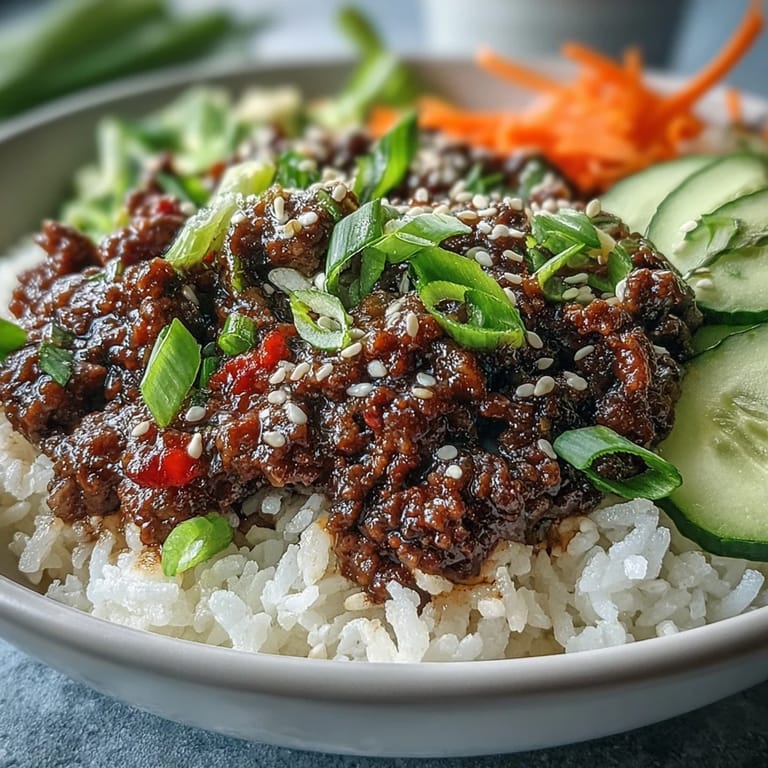
 My neighbor brought over this Korean ground beef bowl on a random Tuesday evening, and I remember being struck by how the kitchen smelled—ginger and sesame oil mingling with something slightly sweet and savory that I couldn't quite place. She explained it was gochujang, this magical Korean chili paste, and suddenly I understood why she'd been making it constantly. Now I make it whenever I need something that feels both comforting and a little bit exciting, a bowl that tastes like you spent hours cooking when really you spent twenty minutes.
I made this for my sister when she was visiting and trying to eat more vegetables, and watching her face light up when she realized the pickled carrots and cucumber weren't some obligatory side salad but actually crucial to the whole experience—that's when I knew this recipe had staying power. She's made it maybe a dozen times since, and she texts me photos of her variations.
Ingredients
- Lean ground beef (500 g or 1 lb): The backbone of this bowl, and you'll want to use something reasonably lean so you're not swimming in grease when it cooks.
- Soy sauce (2 tablespoons, or tamari for gluten-free): This is where the savory depth comes from, so don't skimp on quality—it makes a real difference in the final flavor.
- Toasted sesame oil (1 tablespoon): A little goes a long way with this stuff; it's potent and fragrant, and it's what gives the beef that distinctly Korean aroma.
- Brown sugar (1 tablespoon): This balances the salty and spicy elements, creating that sweet-savory harmony that makes the bowl so craveable.
- Freshly grated ginger (2 teaspoons): Always fresh, never powdered for this dish—the brightness matters.
- Minced garlic (3 cloves): The foundation of the flavor base; mince it yourself if you can, as pre-minced garlic loses something in the jar.
- Gochujang or sriracha (1 teaspoon, optional): This adds heat and complexity, but you can absolutely skip it if spice isn't your thing.
- Green onions (2 thinly sliced): Stir some into the beef and save the rest for garnish to add freshness and a subtle onion bite.
- Sesame seeds (1 tablespoon, plus more for garnish): Toast them lightly in a dry pan before adding if you want them to really sing.
- Cooked jasmine or cauliflower rice (4 cups): Choose based on what you're in the mood for; jasmine rice is silky and traditional, while cauliflower rice keeps things lighter.
- Rice vinegar (1/2 cup): This is the backbone of the pickled vegetables, so use real rice vinegar, not generic white vinegar.
- Carrot, cucumber, and radish for pickling: The vegetables should be cut uniformly so they pickle evenly and look beautiful in the bowl.
Tired of Takeout? 🥡
Get 10 meals you can make faster than delivery arrives. Seriously.
One email. No spam. Unsubscribe anytime.
Instructions
- Start the pickled vegetables first:
- Mix rice vinegar, sugar, and salt in a bowl and stir until the sugar dissolves completely. The heat from the vinegar will speed this up, but you want to make sure there's no grittiness left. Add your julienned carrot, sliced cucumber, and radish, toss gently to coat everything evenly, and let it sit for at least fifteen minutes while you work on the beef—the vegetables will slowly soften and absorb all those bright, tangy flavors.
- Get your rice ready:
- If you're using fresh rice, cook it now or reheat if you've made it ahead. Keep it warm in a covered pot or rice cooker while you finish the beef.
- Brown the ground beef:
- Heat a large skillet over medium-high heat and add the ground beef, breaking it apart with a spoon as it cooks. You want it to be deeply browned and cooked through, which takes about five to seven minutes—don't rush this step because the browning creates flavor. Drain any excess fat if there's a pool of it in the pan.
- Build the flavor layers:
- Lower the heat slightly and add soy sauce, sesame oil, brown sugar, ginger, garlic, and gochujang if you're using it. Stir everything together and let it cook for two to three minutes until the kitchen smells absolutely incredible and the sauce coats the meat. The brown sugar will start to caramelize slightly at the edges, which is exactly what you want.
- Finish with freshness:
- Remove the skillet from heat and stir in the sliced green onions and sesame seeds. Taste it and adjust seasoning if needed—sometimes I add a tiny pinch more salt or a splash more sesame oil depending on my mood.
- Assemble your bowls:
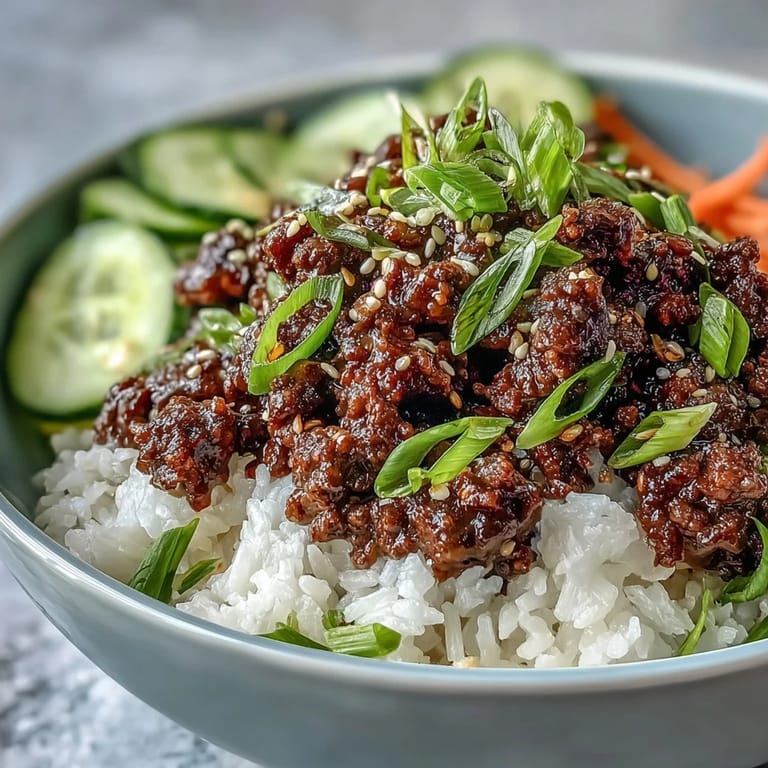
- Divide the rice among four bowls, top each with a generous portion of the seasoned beef, and pile on a handful of those bright pickled vegetables. The contrast between the warm beef and the cool, tangy vegetables is really what makes this work.
- Garnish and serve:
- Sprinkle extra green onions and sesame seeds over the top, and serve immediately while the beef is still warm. This is best eaten right away, though you can store the components separately and assemble later if needed.
 Pin It
 There's something about the way the warm beef contrasts with the cool, crunchy pickled vegetables that transforms this from just dinner into something that feels thoughtful and nourishing. My family now requests this over actual Korean takeout, which I take as the highest compliment.
Why This Becomes a Weeknight Staple
Once you've made this once, you'll realize you can have it on the table faster than it takes to order and wait for delivery. The components are straightforward—there's no complicated technique or specialty equipment needed, just a skillet and a spoon. The beauty is that everything can be prepped the night before, so on a busy evening you're literally just cooking beef and assembling bowls.
Making It Your Own
The framework of this recipe is solid, but the fun part is playing with it. I've made it with ground turkey when beef seemed too heavy, and my partner swears by adding a fried egg on top for richness. The pickled vegetables can change based on what's in your crisper—thinly sliced bell pepper, thin-sliced onion, or daikon radish all work beautifully.
Storage and Variations
You can store the beef and pickled vegetables separately in the refrigerator for up to four days, which makes this an excellent meal prep candidate. The rice base keeps in the fridge as well, so you could theoretically assemble fresh bowls throughout the week without cooking again. For cauliflower rice devotees, the lighter version tastes just as satisfying, especially if you're looking for something less carb-heavy.
- Try stirring a beaten egg into the warm beef at the very end for a slightly richer texture, or serve with a fried egg on top of each bowl.
- Experiment with different pickled vegetables—thinly sliced onion, bell pepper, or daikon radish all bring their own brightness to the bowl.
- If you make a big batch of pickled vegetables, they'll keep for over a week in the refrigerator and are excellent on everything from tacos to salads.
 Pin It
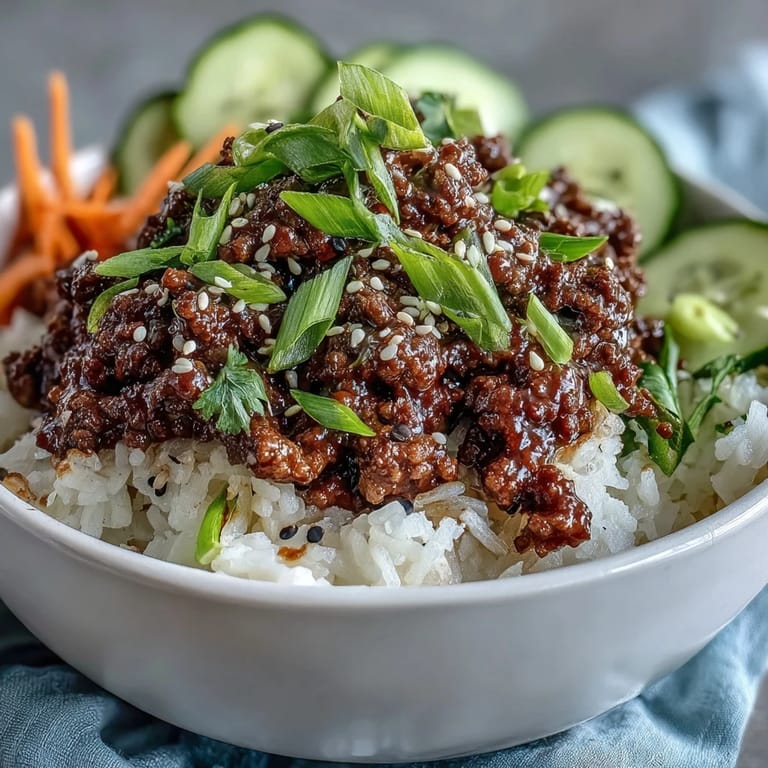
 This bowl has become my go-to when I want something that feels restaurant-quality but doesn't require any real skill or stress. It's one of those recipes that reminds you that simple ingredients treated with care are all you really need.
Recipe FAQs
- → Can I make this dish low-carb?
Absolutely. Simply substitute cauliflower rice for the regular jasmine rice. This reduces the carbohydrates significantly while still providing a satisfying base that absorbs all the savory flavors from the seasoned beef.
- → How spicy is this bowl?
The heat level is mild to medium, depending on whether you include the gochujang or sriracha. You can easily adjust the spice by adding more or less chili paste, or omitting it entirely for a family-friendly version.
- → How long do the pickled vegetables keep?
The quick pickled vegetables will stay fresh in an airtight container in the refrigerator for up to one week. They actually develop more flavor as they sit, so you can prepare them in advance for meal prep.
- → Can I use a different protein?
Yes, ground turkey or chicken work beautifully as lighter alternatives. For a vegetarian version, crumbled firm tofu or tempeh absorb the seasonings well and provide excellent texture and protein.
- → What can I serve alongside this bowl?
This bowl is quite complete on its own, but you could add steamed bok choy, roasted broccoli, or a simple side salad dressed with sesame vinaigrette. A fried egg on top also adds richness and extra protein.
- → Is this dish freezer-friendly?
The seasoned ground beef freezes exceptionally well for up to three months. Store it in portioned containers and reheat gently before serving over freshly cooked rice. The pickled vegetables are best enjoyed fresh but can be refrigerated for several days.