 Pin It
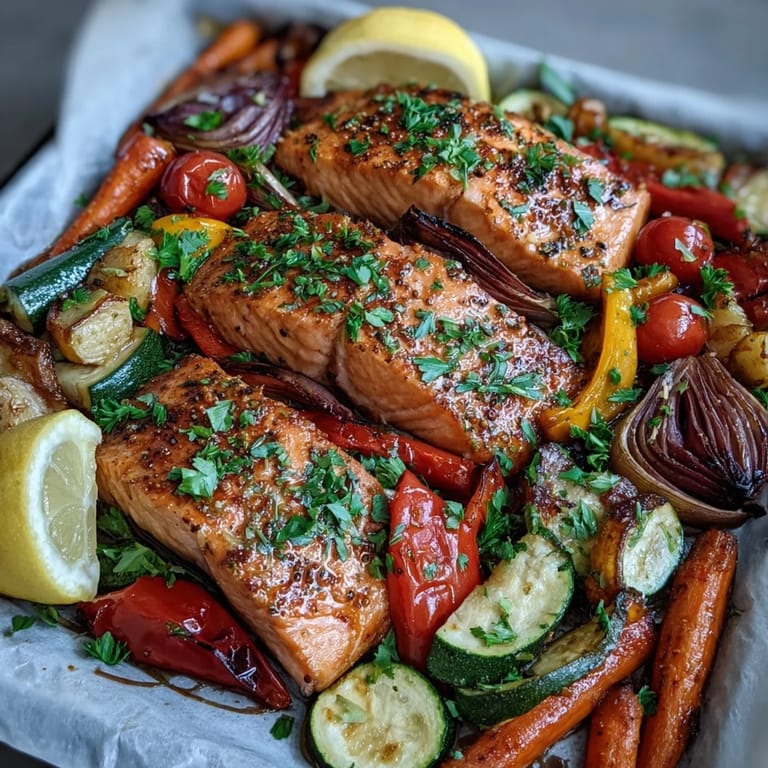
 My neighbor handed me a beautiful salmon fillet one Tuesday evening, fresh from her fishing trip, and I suddenly realized I'd been overthinking dinner for weeks. That night, I threw everything I had onto a sheet pan, tossed it in the oven, and walked away—no fussing, no multi-step sauces, just honest food that came together while I poured a glass of wine. It was the kind of meal that made me wonder why I'd ever spent hours at the stove when this was possible.
I made this for my daughter's soccer team after a tournament, tripling the recipe in my tiny kitchen while she sat on the counter telling me about the game. Watching eight hungry teenagers devour something so simple and wholesome—no complaints, no picking at their food—reminded me that good cooking doesn't require complexity, just quality ingredients treated with a little care.
Ingredients
- Skinless salmon fillets (4, about 5–6 oz each): Pat them completely dry before cooking so they develop a gentle golden exterior instead of steaming. Room temperature salmon cooks more evenly than cold, so pull them from the fridge five minutes before roasting.
- Red onion, carrots, bell peppers, zucchini, cherry tomatoes: The vegetable mix matters less than buying what looks vibrant at your market; hard vegetables like carrots roast longer, so slicing them slightly thinner than softer items like zucchini keeps everything finishing together.
- Olive oil (3 tablespoons total): Use a decent oil that tastes pleasant to you—this isn't the place to use your fancy finishing oil, but cheap oil will make everything taste tinny.
- Lemon zest and fresh parsley: These aren't optional garnishes; they brighten the whole dish and make it taste like something you'd order at a restaurant instead of threw together on a Wednesday.
- Dried Italian herbs: Or mix your own from dried basil, oregano, and thyme; pre-made blends sometimes taste dusty, so taste yours first.
- Salt and black pepper: Season the vegetables generously before roasting—they need more salt than you'd think to develop real flavor.
Tired of Takeout? 🥡
Get 10 meals you can make faster than delivery arrives. Seriously.
One email. No spam. Unsubscribe anytime.
Instructions
- Heat your oven and prep your pan:
- Get your oven to 425°F and line your sheet pan with parchment or foil—this saves cleanup and prevents sticking. A large pan matters here; crowding everything makes things steam instead of roast.
- Season and spread the vegetables:
- Toss your chopped vegetables in a bowl with the olive oil, dried herbs, salt, and pepper until everything glistens, then spread them across the pan in a single layer. Give them space to actually roast rather than pile on top of each other.
- Start the vegetables alone:
- Roast for 10 minutes so they get a head start; salmon cooks faster and would dry out if it sat in the oven the whole time. You'll hear them beginning to sizzle and smell the herbs toasting, which means you're on the right track.
- Prepare the salmon:
- While vegetables roast, pat your salmon fillets dry with paper towels and brush with olive oil on both sides. Sprinkle the lemon zest, salt, and pepper evenly across each fillet.
- Add salmon to the pan:
- Pull the pan out carefully, push vegetables to the edges to create space, then nestle the salmon fillets among them. The vegetables should still be a bit firm, not fully cooked yet.
- Finish roasting:
- Return to the oven for 12–15 minutes until the salmon flakes easily when you press it gently with a fork and the vegetables are tender and caramelized at the edges. Don't overcook the salmon or it becomes dry and mealy.
- Garnish and serve:
- Sprinkle with fresh parsley, squeeze lemon wedges over everything, and serve straight from the pan if you're feeling casual. The whole meal should taste bright, not heavy.
 Pin It
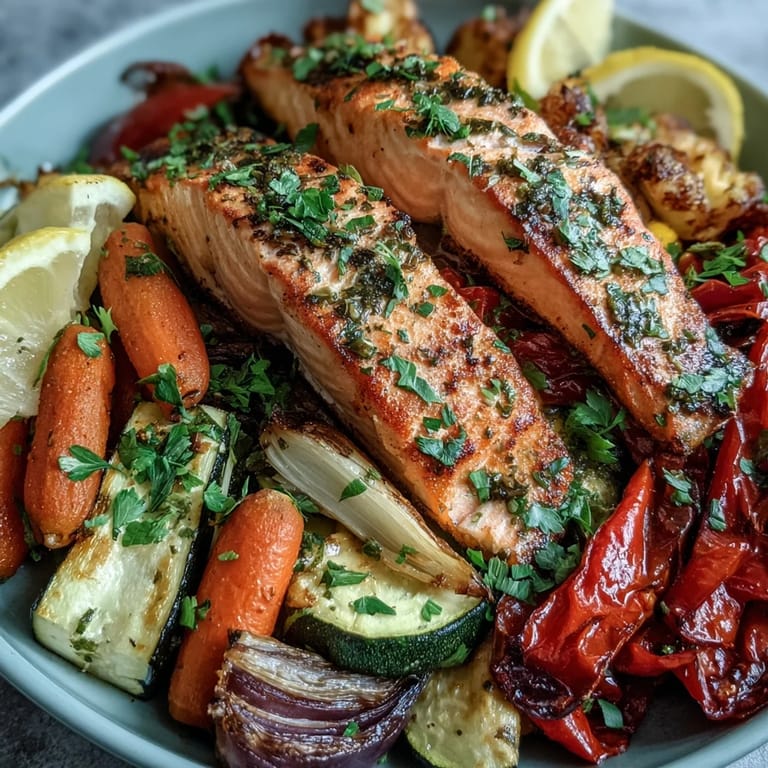
 My kids used to push vegetables around their plates like they were obstacles until I started roasting them this way—suddenly carrots tasted like something worth eating, and cherry tomatoes became these little bursts of sweetness. That's when this dish stopped being a quick dinner and became something I made specifically because they asked for it.
Choosing Your Vegetables
The beauty of sheet pan cooking is flexibility without chaos—you're not juggling multiple pans or timing different elements. Spring calls for asparagus and peas, summer wants zucchini and fresh corn, fall begs for Brussels sprouts, and winter works beautifully with root vegetables. The only rule is to think about cooking times and cut harder vegetables slightly thinner than soft ones.
Making It Your Own
I've made this recipe exactly as written maybe twice, and both times I realized I'd rather adjust it to what's in my kitchen. A crumble of feta cheese added in the last minute turns it into something Mediterranean, balsamic vinegar drizzled over the vegetables adds depth, and a sprinkle of everything bagel seasoning is somehow perfect. The structure is strong enough to hold whatever flavors you want to bring to it.
Leftovers and Meal Prep
This meal tastes nearly as good the next day, either reheated gently in a 350°F oven or eaten straight from the fridge. I've packed it for lunches, crumbled the cold salmon into salads, and even tucked it into grain bowls with a drizzle of tahini. It holds its structure without falling apart, making it one of the best candidates for planned leftovers I know.
- Store in an airtight container for up to three days in the refrigerator.
- Reheat gently at 350°F for about 8 minutes rather than blasting it in the microwave, which can dry the salmon.
- Squeeze fresh lemon over leftovers before serving to brighten flavors that may have mellowed overnight.
 Pin It
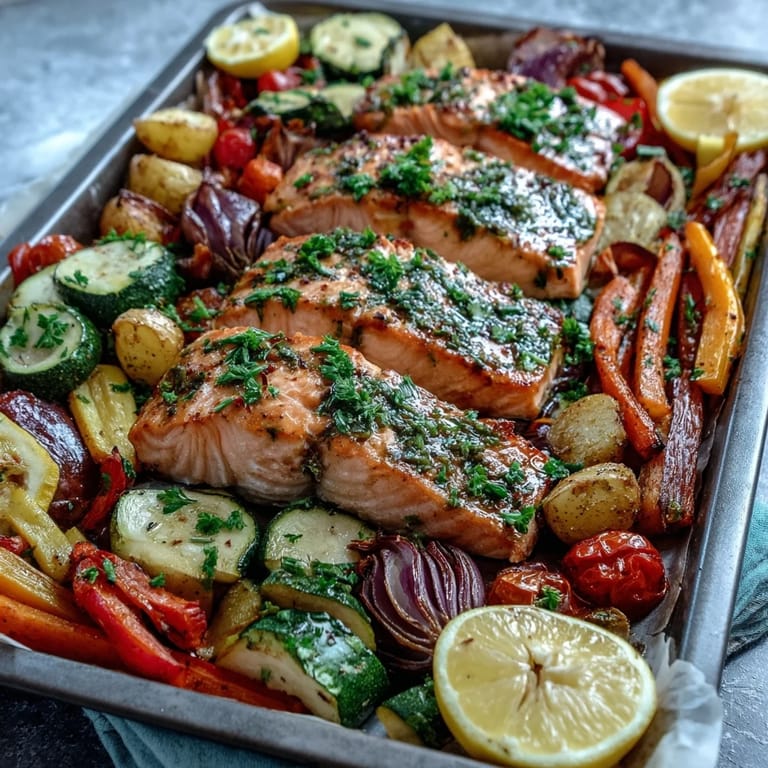
 This recipe taught me that real cooking isn't about impressive techniques or hours at the stove—it's about knowing how heat and timing work together, and then letting the ingredients do their thing. Once you understand that, everything else is just listening to what tastes good.
Recipe FAQs
- → What vegetables work best for this bowl?
Red onion, carrots, bell peppers, zucchini, and cherry tomatoes roast beautifully together. You can also substitute asparagus, broccoli, or sweet potatoes based on what's in season.
- → How do I know when the salmon is done?
The salmon is ready when it flakes easily with a fork and reaches an internal temperature of 145°F (63°C). The flesh should be opaque and slightly pink throughout.
- → Can I use frozen salmon fillets?
Yes, thaw the salmon completely before roasting and pat it dry to remove excess moisture. This helps the fish cook evenly and develop a nice texture.
- → What temperature should the oven be set to?
Preheat your oven to 425°F (220°C) for optimal roasting. This high heat ensures the vegetables caramelize while the salmon stays moist and tender.
- → How long can I store leftovers?
Store any leftover salmon and vegetables in an airtight container in the refrigerator for up to 2-3 days. Reheat gently in the oven or microwave before serving.