 Pin It
 My roommate in college used to cook these noodles every Sunday night while blasting K-pop from her laptop speakers. The smell of garlic and ginger would drift through our tiny apartment, and I'd wander into the kitchen pretending I wasn't already drooling. She taught me how to slice the beef paper-thin and how that glossy soy-brown sugar sauce could turn a handful of vegetables into something that tasted like comfort and celebration at once. Now, years later, I make this same dish when I need a quick escape into flavor.
I once made this for a potluck at work, doubling the recipe and packing it into a massive glass dish. By the time I arrived, the noodles had soaked up even more sauce and turned incredibly glossy. People kept asking if I'd ordered it from a restaurant, and I just smiled. That was the night I realized how impressive a simple stir-fry could look when you let the colors of the vegetables shine through.
Ingredients
- Rice noodles: These silky strands soak up sauce beautifully and stay tender without getting mushy, just be sure not to overcook them or they'll clump together in the skillet.
- Flank steak: Slicing it thinly against the grain keeps each piece tender and quick to cook, and freezing it for 15 minutes beforehand makes slicing so much easier.
- Broccoli florets: They add a crisp, slightly nutty bite that balances the soft noodles, and I've learned that smaller florets cook more evenly in the stir-fry.
- Bell pepper: Red or yellow peppers bring a natural sweetness and a pop of color that makes the dish look vibrant and inviting on the plate.
- Carrot: Julienned carrots cook quickly and add a gentle crunch, plus they soak up the sauce in a way that makes every bite a little different.
- Green onions: Chopped and scattered on top, they offer a fresh, sharp contrast to the rich, savory flavors below.
- Garlic and ginger: These aromatics are the backbone of the dish, releasing their fragrance in seconds and turning plain oil into something magical.
- Soy sauce: It provides the salty, umami-rich foundation of the sauce, and I always use low-sodium so I can control the salt level myself.
- Brown sugar: Just enough sweetness to balance the soy sauce and create that glossy, caramelized coating on the noodles and beef.
- Sesame oil: A small amount goes a long way, adding a toasted, nutty depth that makes the whole dish smell like a street market.
- Vegetable oil: High heat and a neutral oil keep everything from sticking and help achieve that perfect sear on the beef.
- Sesame seeds: A sprinkle at the end adds a subtle crunch and makes the bowl look polished and restaurant-worthy.
Tired of Takeout? 🥡
Get 10 meals you can make faster than delivery arrives. Seriously.
One email. No spam. Unsubscribe anytime.
Instructions
- Prepare the noodles:
- Cook the rice noodles according to package directions, then drain and rinse them under cool water to stop the cooking. This keeps them from turning sticky while you work on everything else.
- Sear the beef:
- Heat vegetable oil in a large skillet or wok over medium-high heat until it shimmers, then add the thinly sliced flank steak in a single layer and let it sear for 2 to 3 minutes until browned. Remove the beef and set it aside so it doesn't overcook.
- Build the aromatics:
- In the same skillet, toss in the minced garlic and grated ginger, stirring for about 30 seconds until the smell fills your kitchen. Don't walk away during this step or they'll burn in an instant.
- Stir-fry the vegetables:
- Add the broccoli florets, sliced bell pepper, and julienned carrot to the skillet, tossing them frequently for about 5 minutes until they're tender but still have a crisp bite. The colors should brighten as they cook.
- Mix the sauce:
- While the vegetables sizzle, whisk together the soy sauce, brown sugar, and sesame oil in a small bowl until the sugar dissolves completely. This glossy mixture is what turns everything into a cohesive, flavor-packed dish.
- Bring it all together:
- Return the beef to the skillet and pour the sauce over the beef and vegetables, stirring to coat everything evenly. Then add the cooked rice noodles and gently toss for about 2 minutes until the noodles are heated through and every strand is glossy.
- Finish and serve:
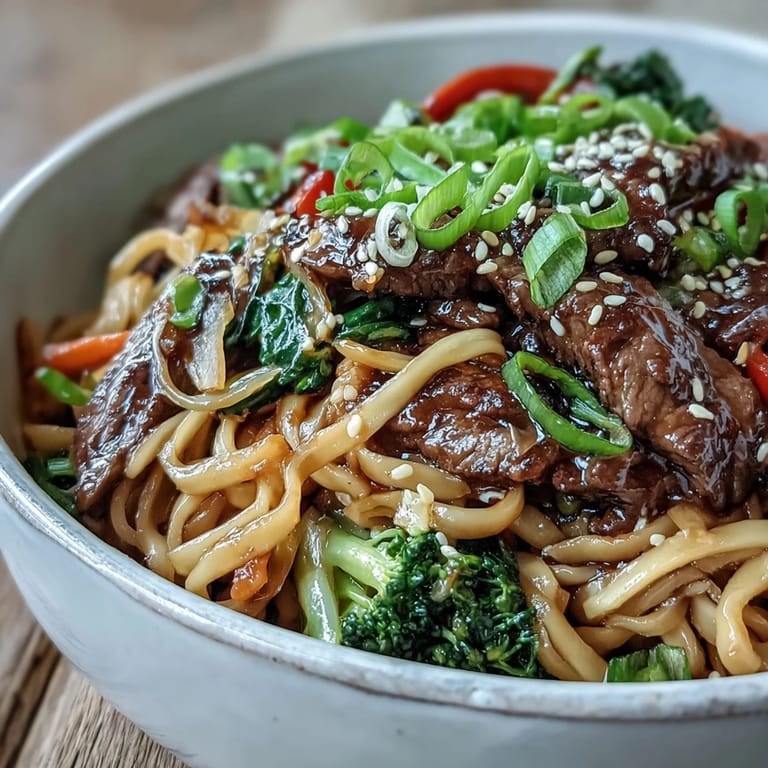
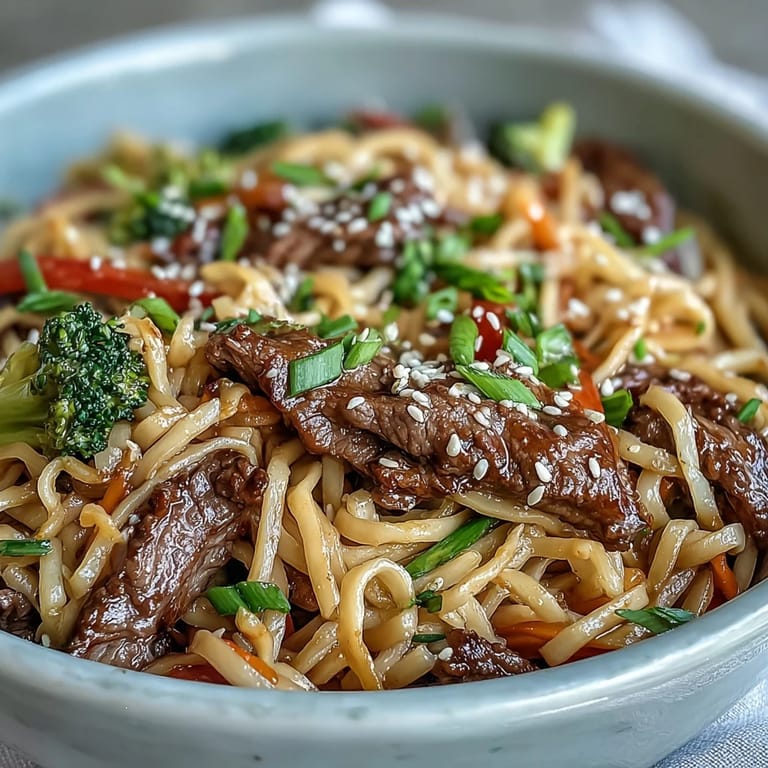
- Transfer the noodles to serving bowls and garnish with chopped green onions and a generous sprinkle of sesame seeds. Serve immediately while everything is still hot and fragrant.
 Pin It
 One rainy evening, I made this for my partner after a long day, and we sat on the couch with our bowls balanced on our knees, slurping noodles and laughing at how the sesame seeds kept sticking to our chins. It wasn't fancy, but it felt like exactly what we needed. That's when I understood that the best recipes aren't just about flavor, they're about the moments they create.
Swapping Proteins and Vegetables
I've made this with chicken thighs, shrimp, and even crispy tofu, and each version brings its own texture and personality to the bowl. Snap peas, zucchini, and mushrooms all work beautifully if you want to switch up the vegetables, and I've learned that adding them in order of cooking time keeps everything perfectly tender-crisp. The sauce is forgiving and clings to just about any combination you throw at it, so don't be afraid to improvise based on what's in your fridge.
Adding Heat and Spice
If you like a spicy kick, stir a spoonful of gochujang or sriracha into the sauce before pouring it over the beef and vegetables. I once added too much gochujang and spent the entire meal fanning my mouth, but even then, the sweetness of the brown sugar helped balance the heat. Start with a teaspoon, taste, and add more if you want your noodles to have a fiery edge that lingers on your tongue.
Storing and Reheating Leftovers
Leftovers keep in an airtight container in the fridge for up to three days, and I've found that reheating them gently in a skillet with a splash of water or broth brings the noodles back to life. The microwave works in a pinch, but the stovetop method keeps the vegetables from turning soggy and the noodles from clumping. Sometimes I'll crack an egg over the top while reheating and stir it in for a quick, luxurious upgrade.
- Store the noodles and sauce together so the flavors continue to meld overnight.
- Reheat over medium heat and add a splash of soy sauce or sesame oil if the dish seems dry.
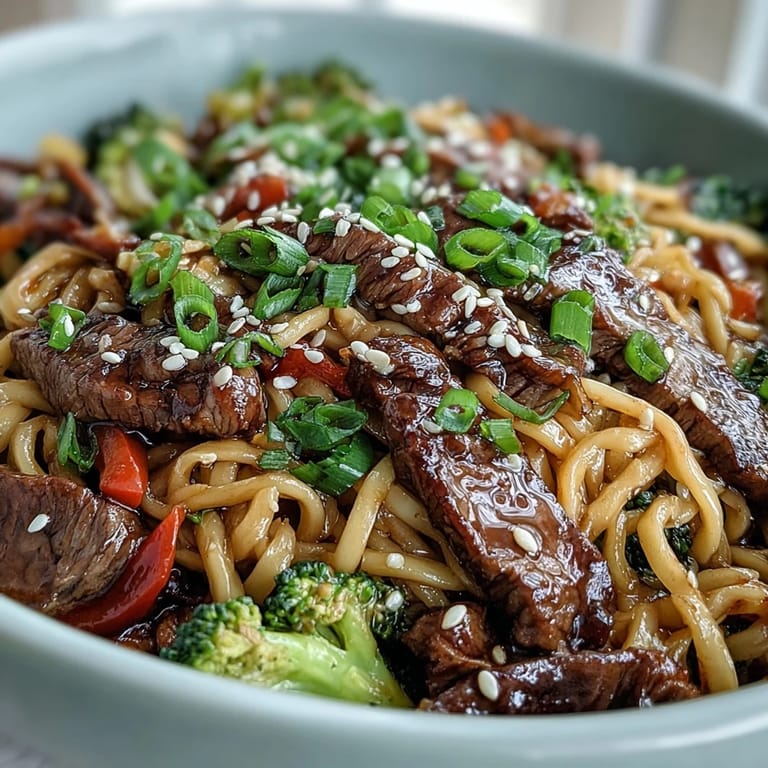
- Top reheated bowls with fresh green onions and sesame seeds to bring back that just-cooked brightness.
 Pin It
 This dish has become my go-to whenever I want something comforting, colorful, and quick enough to pull off on a weeknight. I hope it brings you the same kind of warmth and satisfaction it's brought to my kitchen, bowl after bowl.
Recipe FAQs
- → What type of beef works best?
Flank steak sliced thinly against the grain stays tender during quick cooking. You can substitute skirt steak or sirloin if needed.
- → Can I make this ahead?
The components can be prepped in advance, but it's best freshly made. Leftovers keep well for 3 days in an airtight container.
- → How do I prevent mushy noodles?
Cook rice noodles according to package directions, drain promptly, and add them last. Toss gently just until heated through.
- → Can I add more heat?
Sriracha or gochujang stirred into the sauce adds authentic Korean spice. Start with one teaspoon and adjust to taste.
- → What vegetables work well?
Broccoli, bell peppers, and carrots provide color and crunch. Snap peas, zucchini, or bok choy make excellent additions.