 Pin It
 My neighbor brought over a thermos of Manhattan clam chowder on the first truly cold day of autumn, and I spent the afternoon trying to figure out why mine never tasted quite like that—bright, tomato-forward, with clams that somehow stayed tender instead of rubbery. Turns out, the secret wasn't some fancy technique but understanding that this soup lives or dies by respecting the clams themselves and not letting them cook a second longer than necessary. Once I cracked that, everything else fell into place, and suddenly I had a pot of something that tasted like a New England fishing village, right there in my kitchen.
I made this for my friend Marcus when he was going through a rough patch, and he sat at my kitchen counter for three hours, just eating bowl after bowl while we talked. He told me later that the soup made him feel like someone was taking care of him, which sounds simple but meant everything. That's when I realized this wasn't just a recipe—it was a way of saying, "I see you, and I want you to feel better."
Ingredients
- Fresh clams (littlenecks, 2 pounds) or canned clams (3 cups, drained): Fresh clams have a briny sweetness that canned ones can't quite match, but canned works beautifully if that's what you have on hand or what fits your budget—just drain them well so you're not adding extra salt.
- Clam juice (3 cups): This is liquid gold; if you steamed fresh clams, don't throw away that cooking liquid, and if you're using bottled juice, taste it first because brands vary wildly in saltiness.
- Canned diced tomatoes (28 ounces): San Marzano varieties tend to be sweeter and less acidic, which makes a noticeable difference in the final flavor, though any good quality canned tomato will do.
- Olive oil (2 tablespoons): This isn't the place to use your best extra-virgin; a mid-range oil lets the seafood and tomatoes shine without competing.
- Onion, celery, carrots, bell pepper: These are your flavor foundation, and taking the time to dice them evenly means they'll cook at the same rate and create a balanced vegetable presence throughout.
- Yukon gold potatoes (3 medium): They hold their shape better than russets and have a slight buttery flavor that complements the briny clams perfectly.
- Garlic (3 cloves, minced): Mince it fine and let it bloom in the oil briefly—this prevents any harsh, raw bite and lets its sweetness emerge.
- Dried thyme and oregano (1 teaspoon each): These herbs are understated here, just enough to whisper their presence without drowning out the seafood.
- Red pepper flakes (½ teaspoon, optional): A pinch of heat at the end can brighten everything, but it's truly optional if you prefer a gentler finish.
- Bay leaves (2): Remove them before serving—I learned this the hard way when someone bit into one and made a face I'll never forget.
- Fresh parsley (2 tablespoons, chopped): Add this just before serving so it keeps its color and flavor; dried parsley turns this from homemade-looking to canned-soup-looking in an instant.
Tired of Takeout? 🥡
Get 10 meals you can make faster than delivery arrives. Seriously.
One email. No spam. Unsubscribe anytime.
Instructions
- Get your clams ready (if using fresh):
- Scrub them under cold running water, feeling for any with cracks or that won't close when tapped—those go straight to the trash. Place them in your pot with 1 cup water, cover it, and turn the heat to medium-high; you'll hear them start to pop open within a few minutes, and that sound means they're almost done. Once they're all open (usually 5 to 7 minutes total), pull them out, let them cool enough to handle, pop them out of their shells, chop them into bite-sized pieces, and set them aside in a bowl while you strain their cooking liquid through a fine sieve to catch any sand or grit.
- Sauté your vegetables:
- Pour olive oil into your pot, turn the heat to medium, and once it shimmers slightly, add your chopped onion, celery, carrots, and bell pepper all at once. Stir occasionally for about 6 to 8 minutes until they soften and the onion turns translucent; you'll smell them sweetening as they cook, which is your signal you're doing it right.
- Wake up the garlic:
- Stir in your minced garlic and let it cook for just 1 minute until it becomes fragrant and loses that raw edge. Don't let it brown or it'll turn bitter.
- Build the broth:
- Add your diced potatoes, canned tomatoes with their juice, clam juice, reserved clam cooking liquid, thyme, oregano, bay leaves, red pepper flakes if you're using them, salt, and black pepper. Stir everything together and let it come to a boil, then immediately lower the heat to a gentle simmer.
- Let it cook gently:
- Leave the pot uncovered and simmer for 20 to 25 minutes until the potatoes are fork-tender but not falling apart. Taste a piece of potato to know when you're there—they should be soft enough to break easily but still hold their shape.
- Bring in the clams:
- Stir in your chopped clams and let them warm through for 3 to 5 minutes—this is where patience matters most, because clams toughen quickly with heat, and you want them tender, not rubbery. If you're using canned clams that are already cooked, even less time is needed.
- Season and finish:
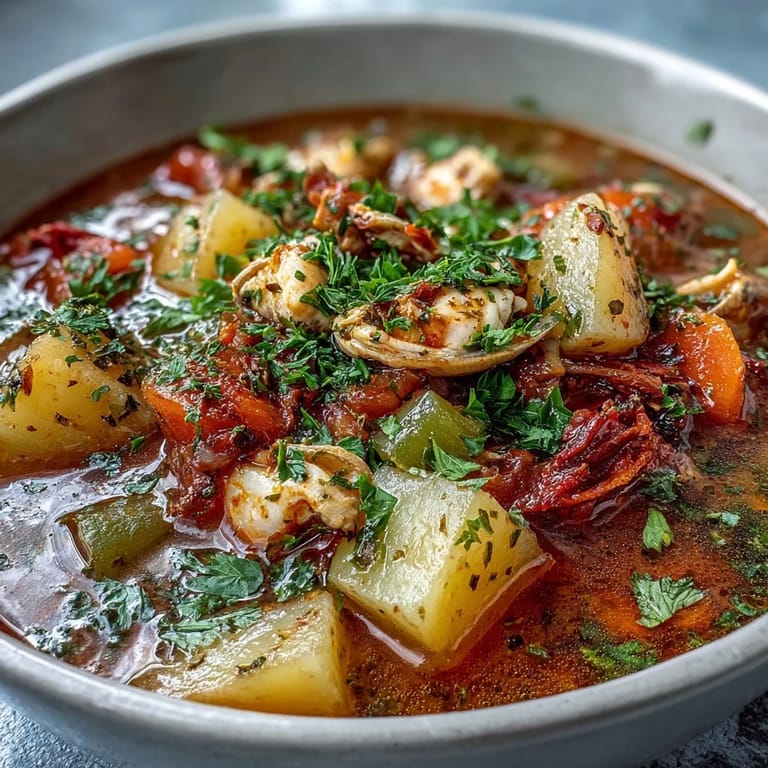
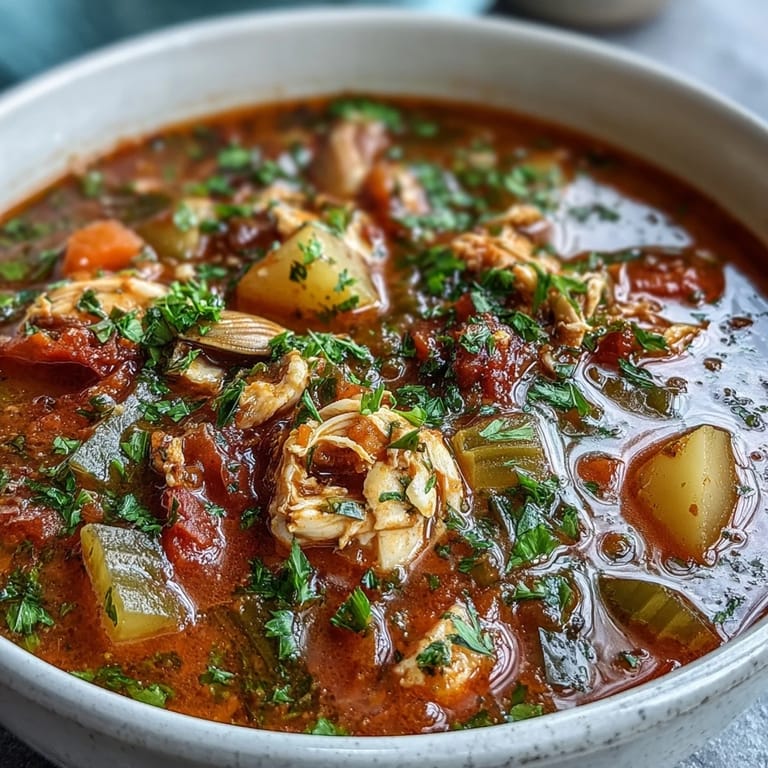
- Remove the pot from heat, fish out the bay leaves and discard them, taste the soup, and adjust salt and pepper as needed. Ladle it into bowls, scatter some fresh chopped parsley on top, and serve while it's still steaming.
 Pin It
 There's a moment midway through cooking when the kitchen fills with the smell of garlic and tomatoes and ocean, and if you pause and just breathe that in, you understand why people have been making this soup for generations. It's not complicated, but it's complete—it asks for respect and attention, and in return, it gives you something that tastes like home, even if you've never lived near the sea.
Fresh Versus Canned: Which to Choose
Fresh clams are worth seeking out if your market has them and they're reasonably priced, because they bring a briny sweetness and tender texture that feels special. The work of steaming and shelling them takes maybe an extra 10 minutes, and if you treat that time as part of the pleasure rather than a chore, it becomes meditative rather than annoying. Canned clams work beautifully too—they're already cooked and chopped, so you're just adding them at the end, and honestly, some days that's exactly what you need.
Why This Version Tastes Different From New England Clam Chowder
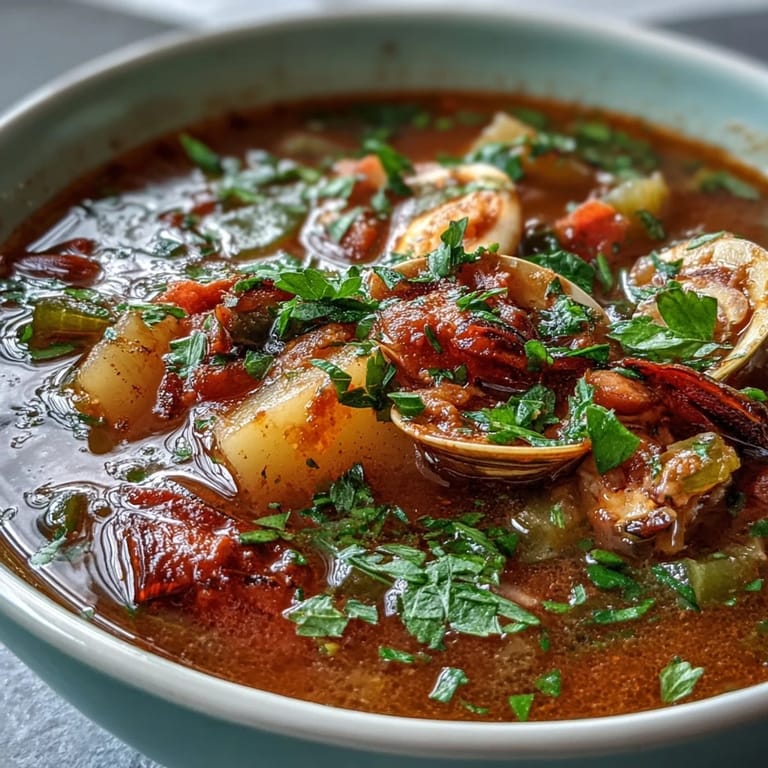
New England clam chowder swims in cream and butter, all white and luxurious, while Manhattan chowder is lean and bright, its color coming from tomatoes instead. The tomatoes add acidity that keeps everything from feeling heavy, and they interact with the briny clams in a way that feels exciting and alive. If you've only ever had the cream version, this one might surprise you with how satisfying it is without any dairy at all—the clams themselves are rich enough, and the tomato broth carries their flavor further.
Serving Suggestions and Variations
Crusty sourdough bread is the classic pairing, perfect for soaking up every drop of broth, and oyster crackers add a nostalgic crunch that works too. Some people love a shake of hot sauce stirred in, while others prefer this soup exactly as it comes. Here's what I've learned works beautifully in variations:
- A handful of corn kernels (fresh or frozen) adds sweetness and texture without overwhelming the clams or tomatoes.
- If you want smokiness, render some bacon, set it aside, use its fat instead of olive oil, then crumble the bacon back in at the end—it changes the whole profile without making it heavy.
- Red bell pepper instead of green brings more sweetness; green pepper is slightly more grassy and herbaceous, so choose based on whether you want brightness or warmth.
 Pin It
 This soup reminds me that the best meals aren't always the most complicated ones—they're the ones made with good ingredients and genuine attention. Serve it hot, share it generously, and watch people's faces light up when they taste it.
Recipe FAQs
- → Can I use canned clams instead of fresh?
Yes, canned chopped clams work perfectly. Use 3 cups drained clams and reserve the juice to add to your clam broth base.
- → What makes Manhattan chowder different from New England?
Manhattan chowder features a clear, tomato-based broth rather than cream, creating a lighter, tangier soup with vibrant red color and zesty flavor profile.
- → How do I prevent the potatoes from becoming mushy?
Cut potatoes into uniform chunks and simmer gently rather than boiling vigorously. Check for tenderness after 20 minutes to avoid overcooking.
- → Can I make this chowder ahead of time?
Absolutely. The flavors deepen when refrigerated overnight. Reheat gently over medium-low heat, adding a splash of water or broth if needed to adjust consistency.
- → What type of clams work best?
Littleneck clams are ideal for their sweet, tender meat. Cherrystone clams also work well. Scrub shells thoroughly and discard any that don't open during steaming.
- → Is this chowder naturally dairy-free?
Yes, Manhattan-style chowder contains no dairy products, making it suitable for lactose-intolerant individuals and pescatarian diets.